THE COMPLETE GUIDE TO BODIE GHOSTOWN
Weathered wooden buildings, quiet streets, and windows into another century make Bodie ghost town a memorable Eastern Sierra day trip. This former gold-mining community is now Bodie State Historic Park, where California’s mining history remains visible in the buildings and belongings left behind.
For travelers staying in Lee Vining, Bodie offers a change of perspective: spend one day exploring Mono Lake or the Sierra’s mountain scenery, then step into a historic town shaped by the search for gold.
What Is Bodie Ghost Town?
Gold was discovered at Bodie in 1859 by William S. Bodey, whose name inspired the town’s. The mining settlement grew into a major community before eventually becoming one of California’s best-known ghost towns. California Office of Historic Preservation
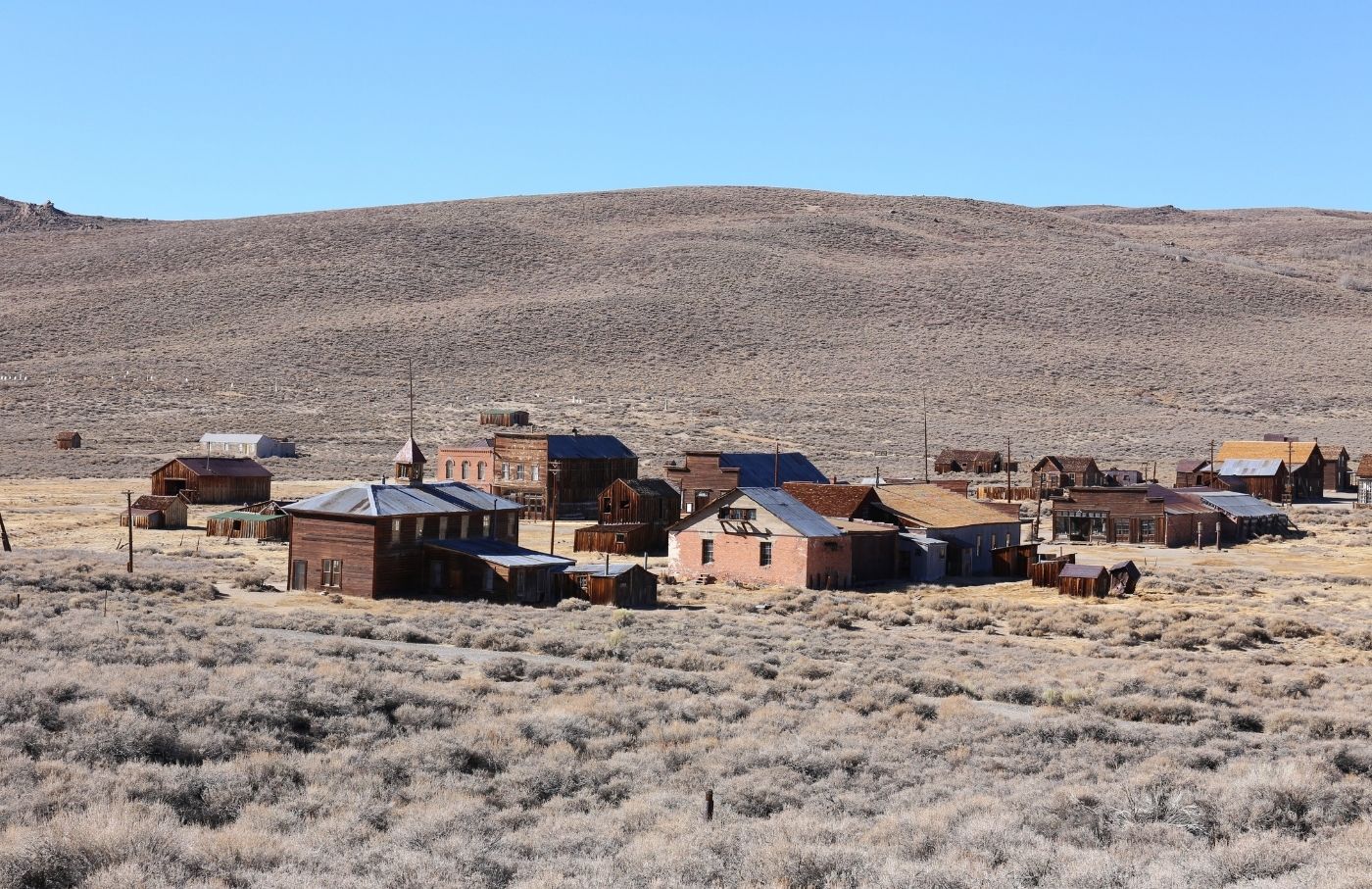
Today, California State Parks preserves Bodie in a condition known as “arrested decay.” Rather than rebuilding the town to look new, preservation work protects its surviving structures and historic character. That approach is central to the experience: Bodie invites you to notice what remains. Bodie State Historic Park
How to Get to Bodie from Lee Vining
From Lee Vining, travel north on Highway 395 and turn east onto Highway 270, also called Bodie Road. Follow it for approximately 13 miles to the park.
The first 10 miles of Highway 270 are paved; the final three miles are unpaved and can be rough. Allow extra time for that last stretch, drive slowly, and check conditions before departing. California State Parks provides the standard approach and road information on its Bodie visitor page.
Plan your visit around the drive as well as the destination. Have directions available before leaving town, and avoid choosing an unfamiliar backroad simply because a navigation app suggests a shorter route.
When Is the Best Time to Visit Bodie?
Summer and fall generally offer the most straightforward visiting conditions. California State Parks recommends these seasons for more accessible roads and a wider range of visitor activities.
Winter and spring require additional planning. Snow can restrict access, and some buildings and seasonal programs close during colder months. Check the park’s current notices, hours, and admission information close to your trip rather than relying on an older itinerary. Plan your Bodie visit
A good approach is to give Bodie its own half-day in your travel schedule. That leaves room for the drive, an unhurried walk, and a return to Lee Vining without trying to squeeze every stop into one afternoon.
What to Do at Bodie Ghost Town
Walk Slowly and Notice the Details
Bodie rewards a slower pace. Look at the shapes of the buildings, the weathered surfaces, and the way the streets sit within the surrounding landscape.
Instead of treating the visit as a checklist, choose a few scenes and spend time with them. Imagine the practical questions of daily life: how people worked, kept warm, and built a community in this setting.
Explore the Town’s History
When available, ranger-led history talks and seasonal stamp mill tours can add context to what you see. Check the park’s program information before arriving, especially if a particular tour is a priority. California State Parks suggests allowing roughly one to three hours to explore. Bodie trip-planning information
Photograph the Historic Landscape
Try a mix of wide views and smaller architectural details. A street scene tells a different story from a close look at a doorway or window.
Follow posted boundaries and leave every object where it belongs. Preserving the scene is part of making the same experience possible for the next visitor.
What to Bring
Prepare before leaving Lee Vining:
- Drinking water and a packed lunch or snacks.
- Comfortable walking shoes.
- Layers, sun protection, and a hat.
- A charged phone or camera.
- Enough fuel for the round trip.
Bodie has no restaurants or gas stations. Stock up before you go, and check the park’s current guidance for available facilities. California State Parks visitor planning
Make Lee Vining Your Base
Use Lee Vining as the starting point for a trip that combines history with the Mono Basin’s natural scenery. Keep your Bodie outing relaxed, then set aside another part of your stay for the shoreline, tufa formations, and birdlife featured in our complete visitor’s guide to Mono Lake.
For more context about the community you’re staying in, explore the history of Lee Vining. Together, these places offer different ways to understand the Eastern Sierra—and good reasons to stay a little longer.