The History of Lee Vining, California: 100 Years at the Crossroads
The History of Lee Vining, California: 100 Years at the Crossroads
The history of Lee Vining brings together mountain travel, mining, community life, and the protection of Mono Lake. For travelers arriving along Highway 395, the town is a place to stop for a meal, settle in for the night, or turn west toward Yosemite. Looking closer reveals a community with a story worth exploring.
In 2026, Lee Vining marks 100 years since its founding in 1926. That anniversary celebrates the town’s development within a landscape whose human history reaches much further back.
Before the Town: The Kootzaduka’a Homeland
The Mono Basin is the homeland of the Kootzaduka’a, whose presence in the Mono Lake and Yosemite region extends to time immemorial. The Tribe’s relationship with the region continues through cultural preservation, stewardship, and community life. The Mono Lake Kootzaduka’a Tribe’s website provides an introduction in the community’s own voice.
Understanding this history gives the centennial its proper context. The year 1926 marks the founding of the town, one chapter in a much longer story.
Learn more in our article about the Kootzaduka’a and their enduring connection to the Mono Basin.
How Did Lee Vining Get Its Name?
The town takes its name from Leroy Vining, a miner who arrived in the Mono Basin with his brother Richard in 1852. By 1860, Vining had established a sawmill and ranch beside the creek that would carry his name.
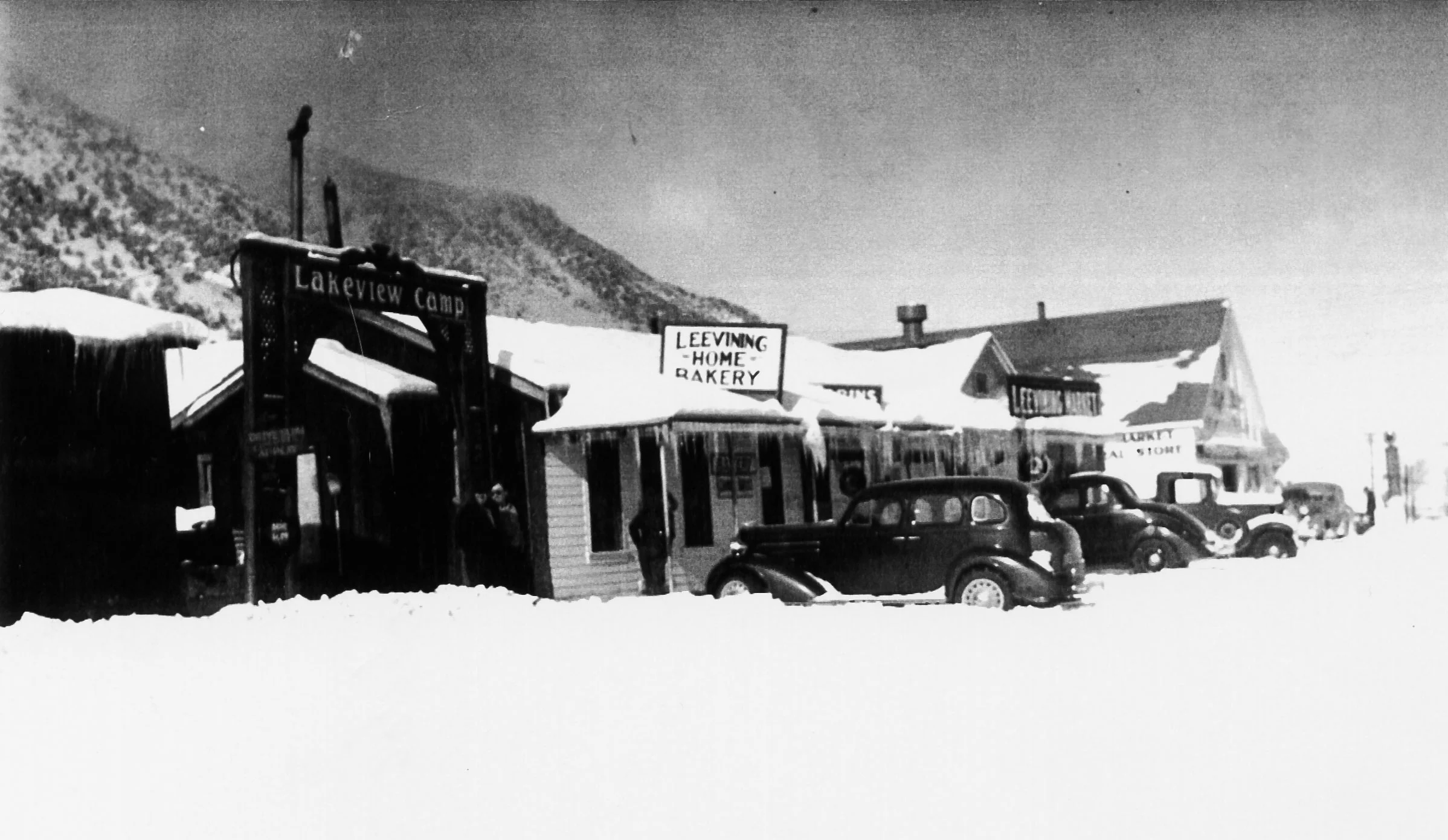
Decades later, Chris Mattly founded the town in 1926. According to the Mono Basin History Museum, its name was written as “Leevining” before officially becoming two words in 1957.
The distinction matters: Leroy Vining was the town’s namesake, while Mattly founded the community commemorated by the centennial.
Mining and the Communities Around Mono Lake
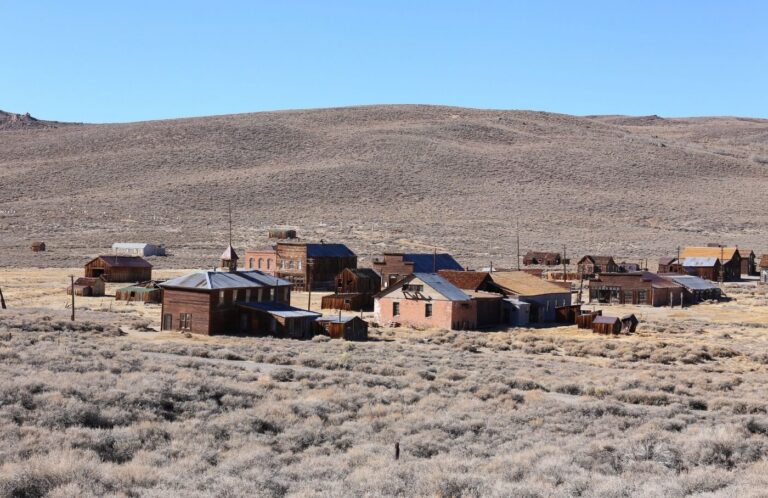
Mining helped shape the region before Lee Vining’s founding. Operations developed at Lundy, Bennettville, and Log Cabin Mine, while Bodie became a major mining center north of the basin. Ranches and farms supplied the mining communities, connecting their fortunes to the surrounding landscape. Mono Basin History Museum
A visit to Bodie adds a tangible dimension to this chapter. Walking among its surviving buildings offers a way to consider the people, supplies, and labor needed to sustain a remote mining town.
Use our complete guide to Bodie ghost town to plan that historical side trip from Lee Vining.
Tioga Road and the Connection to Yosemite
The route across the Sierra is another important part of Lee Vining’s story.
Tioga Road began in 1883 as the Great Sierra Wagon Road, built to serve mining operations near Bennettville. Parts of its route followed an established Indigenous trail across the mountains. In 1915, the road passed into federal ownership, helping open a new chapter of automobile travel through Yosemite. National Park Service transportation history
Road improvements continued over the following decades. Reconstruction of a difficult central section culminated in the opening of the improved route on June 24, 1961. The project also prompted debate about how to accommodate visitors while protecting Yosemite’s landscape. National Park Service history of Tioga Road reconstruction
For Lee Vining, the mountain crossing helps explain the town’s position at a crossroads. North and south lies the Eastern Sierra corridor. West lies the route toward Yosemite’s high country.
If that journey is part of your itinerary, explore our guide to Lee Vining as Yosemite’s eastern gateway.
Mono Lake and a Turning Point in Conservation
Water became a defining issue in the Mono Basin during the twentieth century.
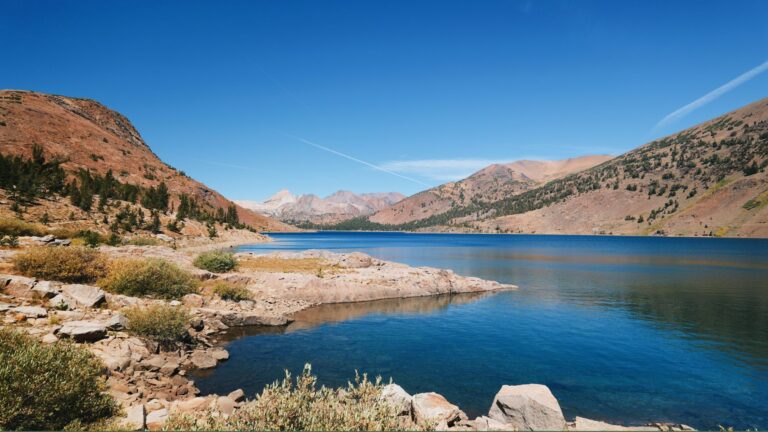
Diversions of water from Mono Lake’s tributary streams to Los Angeles began in 1941. Between 1941 and 1982, the lake’s level fell approximately 45 feet, causing substantial environmental damage.
In 1994, the California State Water Resources Control Board adopted Decision 1631. It amended Los Angeles’s water rights licenses, establishing streamflow requirements, limits on water exports, and protections for resources in and around the lake. California State Water Resources Control Board
The surrounding landscape also gained federal protection. Congress established the Mono Basin National Forest Scenic Area in 1984, recognizing the basin’s ecological, geological, and cultural importance. Mono Lake Committee
These developments make conservation an essential part of any account of Lee Vining’s history. A visit to the lake offers an opportunity to consider how decisions about water affect wildlife, landscapes, and communities.
Our complete visitor’s guide to Mono Lake can help you plan time along the shoreline.
Where to Explore Lee Vining’s History
Begin at the Mono Basin History Museum, housed in the old Mono Lake schoolhouse at the south end of Hess County Park. Its collections include photographs, maps, artifacts, and equipment documenting the region’s past. Check the museum’s website for visitor information before your trip.
Give yourself time to look closely at the photographs. Compare the roads, buildings, and shorelines with what you see outside. Local history becomes easier to understand when familiar places appear in a different decade.
Then choose an outing that follows your interests: Bodie for mining history, Mono Lake for conservation, or the Yosemite route for the story of travel across the Sierra.
Celebrating 100 Years in 2026
Lee Vining’s centennial recognizes a century of town life since 1926. Mono County’s listing for the August 29, 2026, Centennial Fair placed that celebration at Guss Hess Park, with the Mono Basin Historical Society as its sponsoring partner. Lee Vining Centennial Fair
An anniversary is also an invitation to spend more time in the place being celebrated. On your next visit, make room for the museum, learn about the Kootzaduka’a homeland, and explore the lake and surrounding historic sites.
You will leave with a fuller understanding of Lee Vining: a community whose history connects the road, the mountains, and the water.